Why “Touching Grass” Actually Works: How Nature Helps the Brain Reset
You’ve probably heard someone say, “Go touch grass.” This is usually said as a joke when someone’s acting a little out of touch or wound up, but it’s actually solid advice. Stepping outside and connecting with nature isn’t just a mood boost. It’s a full-body, brain-regulating reset, especially for neurodivergent kids (and parents, too).
Nature and the Nervous System
When we’re stressed, overstimulated, or just done, our sympathetic nervous system (the fight-flight-freeze response) kicks into overdrive. Our heart races, our breathing gets shallow, and our thoughts spiral.
Nature flips that switch.
When we step outside, our body starts activating the parasympathetic nervous system. This is the “rest and digest” mode. Breathing slows, shoulders drop, and our brains finally get the message: you’re safe. You don’t have to be on alert. For neurodivergent kids who live in a world that often overstimulates them, nature offers a rare sense of calm their bodies crave.
It Literally Lowers Stress Hormones
Research shows that even 15–20 minutes outside can lower cortisol (the stress hormone) and decrease heart rate and blood pressure. Nature sounds, such as birds, wind, and flowing water, do the same thing.
If you live in the city, you can still get the benefits. Try playing a nature soundscape before bed or during downtime. It’s a simple way to cue your body to relax.
Soft Sensory Input = Sensory Integration
One of the most powerful things about nature is its sensory input. It’s rhythmic and predictable, not overwhelming like screens or crowded environments.
The crunch of leaves, the feel of grass, and the sound of wind through trees all help our brains organize sensory information in a safe, balanced way. For kids with ADHD or autism, this is huge. It’s how their nervous systems practice filtering and integrating sensations, rather than being flooded by them.
It’s like giving their nervous system a reboot.
Parents Benefit Too
When you walk barefoot in the grass or take a slow breath of fresh air, your body gets the same reset. That’s co-regulation in action when your body calms, your child’s nervous system picks up on it too.
The next time you’re on the edge of snapping over spilled Kool-Aid on the carpet (we’ve all been there), take a step outside before you react. It’s not avoidance, it’s regulation.
Unstructured Play Builds Flexibility
Nature also teaches emotional flexibility. Outside, things don’t always go as planned. The ground is uneven, a bug lands on your arm, and the wind blows your art project away. These small moments teach resilience, which is the ability to adapt and recover in a safe, non-threatening way.
Kids learn that not everything is controllable, and that’s okay. Because “the wind” isn’t someone to get mad at, it removes the social pressure that often makes emotional regulation harder.
Simple Ways to Get Outside With Your Kids
If your kids need more structure (or ideas) for outdoor time, here are a few sensory-friendly ways to make it easier:
Go on a leaf or nature hunt. Find five different colors or textures. Fall is perfect for this.
Do a backyard scavenger hunt. Use cards or pictures to find “something rough,” “something smooth,” or “something that smells good.”
Bring comfort items outdoors. Noise-canceling headphones, fidgets, snacks, or a blanket can make outside time feel safer.
Take movement breaks. When a task gets tough, say, “Let’s run around the house three times and come back.” It helps reset attention.
Use playgrounds for practice. Parks are natural social classrooms where kids can work on taking turns, problem-solving, and communication, all through play.
Overcoming Common Barriers
Transitions can be tricky. If your child resists going outside, start small. Even a few minutes on the porch or by an open window counts.
Sensory overload can also happen outdoors (wind, heat, bright light), so be flexible with timing and comfort. Early morning or late afternoon can be gentler on sensitive systems.
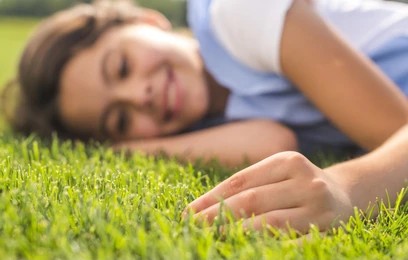
Remember: outdoor time doesn’t have to mean big adventures. Collect leaves, rake the yard, or just lie in the grass and breathe. The goal is regulation, not recreation.
Start With One Small Step
You don’t have to overhaul your week to make nature part of your rhythm. Just choose one small thing, a walk after dinner, five minutes of sunlight before school, or eating a snack outside.
Notice how your body feels afterward. Notice how your child’s energy shifts. Those moments of calm and connection are your nervous systems syncing up.
If you want simpler, science-backed regulation tools for your family, join our Neurodivergent Parenting Community. Inside, we share practical strategies that actually work from parents and professionals who get it.


